AI image generation has come a long way in just a few years.
What once required professional design skills can now be done with a simple text prompt. Whether you’re creating blog graphics, marketing materials, concept art, or social media content, AI image generators have become valuable creative tools for beginners and professionals alike.
The challenge is choosing the right one.
Midjourney, DALL·E, Flux, and Leonardo AI all produce impressive images, but they aren’t designed for exactly the same type of user.
In this guide, we’ll compare the strengths of today’s leading AI image generators and help you decide which one fits your creative workflow.
What Should You Look For?
Not every image generator produces the same results.
Before choosing one, think about what matters most to you.
- Image quality
- Realism
- Artistic style
- Ease of use
- Editing features
- Speed
- Free access
Some tools focus on photorealistic images, while others excel at illustrations or concept art.
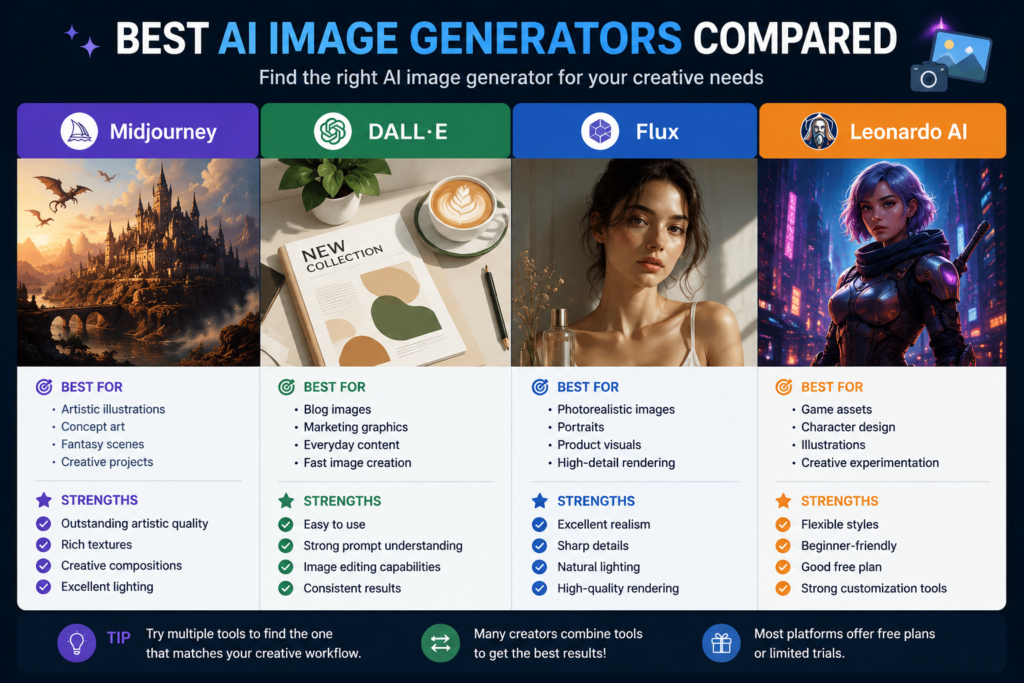
Midjourney
Best For
- Artistic illustrations
- Concept art
- Fantasy scenes
- Creative projects
Midjourney is known for producing visually striking artwork with rich detail and strong artistic style.
Many designers and digital artists prefer it because the results often look polished with minimal editing.
Strengths
- Outstanding artistic quality
- Rich textures
- Creative compositions
- Excellent lighting
DALL·E
Best For
- Blog images
- Marketing graphics
- Everyday content
- Fast image creation
DALL·E focuses on balancing quality with simplicity.
It’s easy for beginners to use and does a good job following detailed prompts.
It also supports image editing, making it useful for refining existing visuals.
Strengths
- Easy to use
- Strong prompt understanding
- Image editing capabilities
- Consistent results
Flux
Best For
- Photorealistic images
- Portraits
- Product visuals
- High-detail rendering
Flux has quickly become popular for creating realistic-looking images with impressive detail.
Many users choose it when they want images that resemble professional photography.
Strengths
- Excellent realism
- Sharp details
- Natural lighting
- High-quality rendering
Leonardo AI
Best For
- Game assets
- Character design
- Illustrations
- Creative experimentation
Leonardo AI offers a wide range of styles and customization options.
Its generous free plan also makes it attractive for beginners who want to experiment before paying for premium features.
Strengths
- Flexible styles
- Beginner-friendly
- Good free plan
- Strong customization tools
Which One Should You Choose?
Your choice depends on what you’re creating.
| If you want to… | Recommended Tool |
|---|---|
| Create artistic illustrations | Midjourney |
| Make blog or marketing images | DALL·E |
| Generate realistic photos | Flux |
| Design characters or game assets | Leonardo AI |
Many creators use more than one platform depending on the project.
For example, they might generate realistic images with Flux and create fantasy artwork using Midjourney.
Free vs Paid Options
Most image generators offer either a free plan or a limited trial.
If you’re just starting out, try several platforms before committing to a subscription.
You’ll quickly discover which interface, image style, and workflow suit you best.
Final Thoughts
AI image generation is evolving rapidly, and each platform brings something different to the table.
Rather than searching for a single “best” tool, focus on finding the one that matches your creative goals.
Whether you’re a blogger, designer, marketer, or hobbyist, there’s an AI image generator that can help turn your ideas into visuals in just a few seconds.
In the next article, we’ll compare the best AI video generators available today and see which platforms are leading the future of AI-powered video creation.
Next Reading: Best AI Video Generators Compared (2026): Runway vs Kling vs Pika vs Veo